
psychedelics
psychedelic mushroom strains
Dec
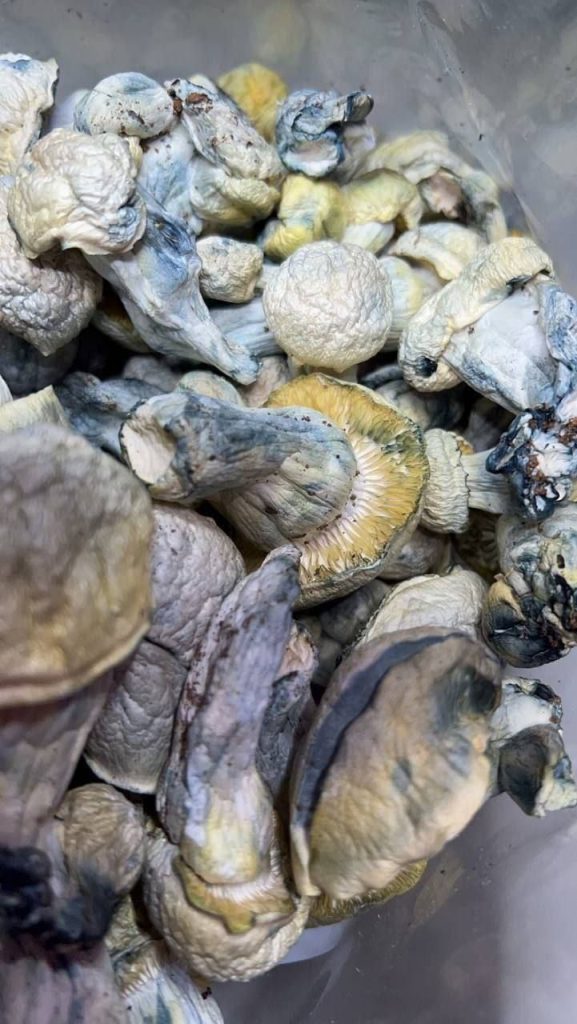
How Penis Envy Psychedelic Mushrooms Differ From Standard Cubensis
psychedelic mushroom strains, Penis Envy psychedelic mushrooms are genetically linked to Psilocybe cubensis, but their growth pattern and chemical profile set them apart. They typically develop thicker stems, smaller caps, and slower colonization times. These physical traits often correlate with denser psilocybin concentration, which is why Penis Envy is widely regarded as more potent than average cubensis varieties.
Unlike fast-growing strains, Penis Envy mushrooms are less forgiving during cultivation, making them less common in casual circulation and more associated with experienced growers and users.
Blue Meanie Psychedelic Mushrooms: Cubensis vs Panaeolus Types
The name Blue Meanie psychedelic mushrooms refers to two distinct categories that are frequently confused.
One is a Psilocybe cubensis variety nicknamed Blue Meanie, known for:
Moderate-to-high potency
Classic cubensis visuals
Balanced mental and sensory effects
The other is Panaeolus cyanescens, a different species entirely, often smaller in size but significantly stronger by weight. Panaeolus Blue Meanies are known for:
Rapid onset
Strong body sensations
Clear but intense cognitive shifts
Most blogs fail to distinguish these clearly, despite the differences being substantial.
Albino and Leucistic Psychedelic Mushroom Strains
Albino and leucistic psychedelic mushroom strains, such as Albino Penis Envy (APE), are mutations that affect pigmentation rather than potency alone. Albino strains lack melanin, resulting in pale or white fruiting bodies.
Albino Penis Envy, in particular, is often reported to have:
Stronger introspective effects
Reduced external visuals compared to standard Penis Envy
Longer-lasting cognitive shifts
These strains are frequently mistaken as novelty mushrooms, but their differences are meaningful rather than cosmetic.
Fast-Growing vs Slow-Growing Psychedelic Mushroom Strains
Not all psychedelic mushroom strains behave the same during growth, and growth speed often correlates with user preference.
Fast-growing strains like Golden Teacher tend to produce:
Larger flushes
More consistent potency
Predictable effects
Slower-growing strains such as Penis Envy or Enigma are often:
More potent per gram
Less visually uniform
Associated with deeper, more immersive experiences
This distinction matters when comparing strain reputation versus real-world experience.
Enigma Psychedelic Mushrooms and Non-Standard Growth Forms
Enigma psychedelic mushrooms are a mutation that does not form traditional caps and stems. Instead, they grow in dense, coral-like clusters. Despite their unusual appearance, Enigma strains are still psilocybin-producing mushrooms.
They are commonly associated with:
Strong mental immersion
Minimal classic “mushroom visuals”
Altered time perception
Because Enigma cannot produce spores, it is propagated only through cloning, making it one of the most genetically stable but least accessible strains.
Why Potency Rankings Between Psychedelic Mushroom Strains Are Unreliable
Many lists attempt to rank psychedelic mushroom strains by strength, but potency varies even within the same strain due to:
Growing conditions
Harvest timing
Drying and storage methods
For example, a well-grown Golden Teacher can outperform a poorly cultivated Penis Envy. This variability is why experienced users focus more on strain tendencies rather than absolute rankings.
Lesser-Known Psychedelic Mushroom Strains Gaining Attention
Beyond Penis Envy and Blue Meanie, several strains are gaining attention for unique characteristics, including:
Tidal Wave – a hybrid known for balanced intensity
Hillbilly – associated with warm, euphoric effects
Z-Strain – fast colonization with classic cubensis effects
These strains are increasingly mentioned in niche communities but rarely covered in depth by mainstream blogs.
Why Understanding Psychedelic Mushroom Strains Matters
Psychedelic mushroom strains are not interchangeable. Each strain brings subtle but meaningful differences in potency, duration, and experiential tone. Understanding these distinctions helps move discussions beyond generic descriptions and toward accurate, strain-specific knowledge.
