
Blog
THC vs CBD Explained for Cannabis Consumers
May
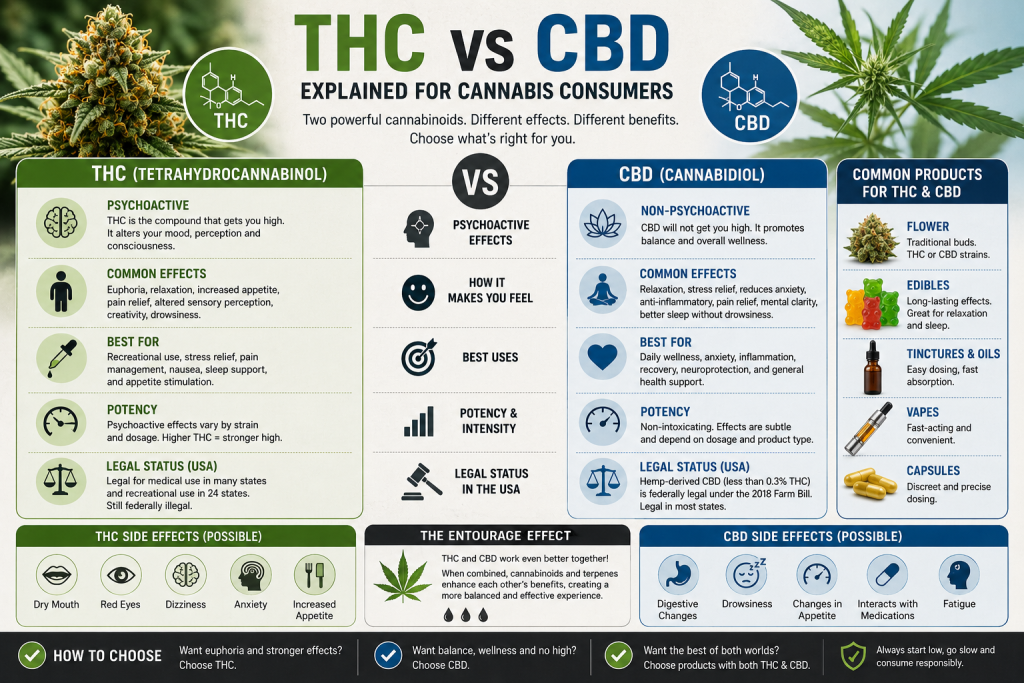
THC vs CBD Explained
As cannabis legalization expands across the United States and Canada, more consumers want to understand the differences between THC and CBD. Although both compounds come from the cannabis plant, they produce very different effects, benefits, and user experiences.
Today’s cannabis market includes thousands of THC and CBD products, including flower, gummies, tinctures, vapes, capsules, oils, and concentrates. However, many consumers still feel confused about how these cannabinoids work and which products best match their personal goals.
Some users seek strong psychoactive effects and relaxation, while others want wellness support without feeling intoxicated. Therefore, understanding THC and CBD helps consumers choose safer, more effective cannabis products.
In this complete guide, you will learn what THC and CBD are, how they interact with the body, their major differences, benefits, side effects, legality, and how to select the right cannabinoid products for your lifestyle.
What Are Cannabinoids?
Cannabinoids are natural compounds found in cannabis plants. Scientists have identified more than 100 cannabinoids, but THC and CBD remain the most researched and widely used.
These compounds interact with the body’s endocannabinoid system, which helps regulate:
- Mood
- Sleep
- Appetite
- Stress response
- Pain perception
- Memory
- Immune function
Although THC and CBD originate from the same plant family, they affect the body differently due to their chemical structure and receptor activity.
What Is THC?
THC stands for tetrahydrocannabinol. It is the primary psychoactive compound in cannabis responsible for the “high” sensation many users experience.
THC interacts strongly with CB1 receptors in the brain and central nervous system. As a result, consumers often experience:
- Euphoria
- Relaxation
- Altered sensory perception
- Increased appetite
- Mood elevation
THC appears in many cannabis products, including:
- Cannabis flower
- Edibles
- Concentrates
- Vape cartridges
- Tinctures
- Pre-rolls
Depending on dosage and strain selection, THC effects can range from mild relaxation to intense psychoactive experiences.
What Is CBD?
CBD stands for cannabidiol. Unlike THC, CBD does not create strong intoxicating effects.
Instead, CBD interacts more indirectly with the endocannabinoid system. Many consumers use CBD products for wellness-focused purposes because they typically support relaxation without producing a noticeable high.
CBD products may include:
- CBD oils
- Gummies
- Capsules
- Topicals
- CBD flower
- Beverages
- Tinctures
Many wellness consumers prefer CBD because it may help promote calmness while allowing users to remain mentally clear and functional.
Main Differences Between THC and CBD
Although THC and CBD both come from cannabis, they differ significantly in several ways.
Psychoactive Effects
THC creates psychoactive effects and intoxication, while CBD usually does not impair cognitive function.
Consumers often choose:
- THC for recreational effects
- CBD for non-intoxicating wellness support
Interaction With Brain Receptors
THC binds directly to CB1 receptors in the brain. CBD interacts more subtly with cannabinoid receptors and may even moderate some THC effects.
Legality
THC products remain more heavily regulated because of psychoactive properties. CBD products derived from hemp are often more widely legal in many areas.
Consumer Goals
People often use THC for:
- Relaxation
- Recreation
- Sleep support
- Appetite stimulation
Meanwhile, consumers frequently use CBD for:
- Stress management
- Daily wellness
- Calm focus
- Recovery support
How THC Affects Cannabis Consumers
THC can affect users differently depending on:
- Dosage
- Tolerance
- Consumption method
- Strain genetics
- Individual body chemistry
Common THC Effects
Consumers may experience:
- Euphoria
- Relaxation
- Happiness
- Enhanced sensory perception
- Increased appetite
- Sleepiness
Higher THC doses may also create:
- Dizziness
- Anxiety
- Dry mouth
- Temporary paranoia
- Impaired coordination
Therefore, beginners should always start with smaller THC doses.
How CBD Affects Cannabis Consumers
CBD generally produces more subtle effects compared to THC.
Common CBD Effects
Many users report:
- Calmness
- Relaxation
- Mental clarity
- Reduced stress
- Physical comfort
Unlike THC, CBD usually allows users to remain productive and alert throughout the day.
However, CBD effects vary between individuals and product types.
THC vs CBD for Relaxation
Both THC and CBD may support relaxation, but they work differently.
THC for Relaxation
THC-heavy products often create:
- Deep body relaxation
- Strong euphoria
- Sleepiness
- Mood elevation
Many evening cannabis consumers prefer THC strains for stress relief after work.
CBD for Relaxation
CBD products may support:
- Gentle calmness
- Stress management
- Emotional balance
- Relaxation without intoxication
Consumers who dislike feeling high often prefer CBD products.
THC vs CBD for Sleep
Sleep support remains one of the most common reasons consumers use cannabinoids.
THC and Sleep
Indica THC strains may help:
- Reduce sleep latency
- Promote drowsiness
- Encourage deeper relaxation
However, very high THC doses may negatively affect sleep quality for some users.
CBD and Sleep
CBD may support relaxation before bedtime while reducing stress-related restlessness.
Many consumers combine THC and CBD products for balanced nighttime effects.
THC vs CBD for Anxiety and Stress
Consumers often compare THC and CBD for stress management.
CBD for Anxiety Support
Many users prefer CBD because it promotes calmness without strong psychoactive effects.
Lower-risk wellness experiences make CBD appealing for daytime use.
THC and Anxiety
Low THC doses may help some users relax. However, excessive THC can increase anxiety in sensitive individuals.
Therefore, balanced THC-to-CBD ratios often work better for beginners.
Different Types of THC and CBD Products
The cannabis market now offers many cannabinoid product categories.
Cannabis Flower
Traditional flower remains one of the most popular THC consumption methods.
CBD flower also exists for users seeking non-intoxicating cannabis experiences.
Edibles
Edibles include:
- Gummies
- Chocolates
- Drinks
- Baked products
Effects last longer but activate more slowly.
Tinctures and Oils
Tinctures provide flexible dosing and convenient administration.
Vape Products
Vape cartridges and disposable pens offer rapid cannabinoid delivery.
Capsules
Capsules allow discreet and consistent dosing.
Full-Spectrum vs Broad-Spectrum vs Isolate
Consumers should also understand cannabinoid extract categories.
Full-Spectrum Products
Full-spectrum products contain:
- THC
- CBD
- Minor cannabinoids
- Terpenes
These products may support the “entourage effect,” where cannabinoids work together synergistically.
Broad-Spectrum Products
Broad-spectrum extracts contain multiple cannabinoids but usually remove THC.
CBD Isolate
CBD isolate contains pure cannabidiol without other cannabis compounds.
THC and CBD Legality in the USA
Cannabis laws continue evolving rapidly across the United States.
THC Laws
THC legality varies by state. Some states allow:
- Recreational cannabis
- Medical marijuana
- Limited THC programs
Federal restrictions still apply in certain situations.
CBD Laws
Hemp-derived CBD containing less than 0.3% THC became federally legal under the 2018 Farm Bill.
However, state regulations still differ regarding CBD sales and product types.
Consumers should always verify local laws before purchasing cannabinoid products.
How to Choose Between THC and CBD
Choosing the right cannabinoid depends on your personal goals.
Choose THC If You Want:
- Strong relaxation
- Euphoria
- Recreational effects
- Sleep support
- Enhanced sensory experiences
Choose CBD If You Want:
- Calmness without intoxication
- Daily wellness support
- Stress management
- Mental clarity
- Mild relaxation
Some consumers combine both cannabinoids for balanced effects.
Tips for First-Time Cannabis Consumers
Beginners should approach cannabinoids carefully.
Start Low and Go Slow
Always begin with smaller doses and gradually increase if needed.
Buy Lab-Tested Products
Lab testing confirms:
- Potency
- Purity
- Safety
- Contaminant screening
Understand Product Labels
Review THC percentages, CBD content, serving sizes, and terpene information before purchasing products.
Consume Responsibly
Avoid driving or operating machinery after consuming THC products.
The Future of THC and CBD Products
The cannabinoid industry continues expanding rapidly in 2026. New products now focus on:
- Precision dosing
- Minor cannabinoids
- Functional wellness blends
- Advanced terpene formulations
- Solventless extraction methods
Consumers increasingly prioritize:
- Product transparency
- Organic cultivation
- Clean extraction
- Consistent potency
- Lab verification
As research improves, cannabinoid education will continue helping consumers make safer and more informed purchasing decisions.
Conclusion
Understanding THC vs CBD helps cannabis consumers choose products that match their goals, tolerance levels, and lifestyle preferences.
THC offers psychoactive effects, euphoria, and strong relaxation, while CBD provides calmness and wellness support without significant intoxication. Although both cannabinoids come from cannabis, they create very different experiences depending on dosage, product type, and individual body chemistry.
Today’s cannabis market offers more cannabinoid options than ever before. By purchasing lab-tested products and starting with responsible dosing, consumers can explore THC and CBD safely while discovering the experiences that work best for them.
Frequently Asked Questions
1. What is the main difference between THC and CBD?
THC creates psychoactive effects and intoxication, while CBD usually promotes calmness without producing a strong high.
2. Does CBD get you high like THC?
No. CBD typically does not create the intoxicating effects associated with THC.
3. Which is better for relaxation: THC or CBD?
Both may support relaxation, but THC usually creates stronger psychoactive effects while CBD offers gentler calmness.
4. Is THC legal in the USA?
THC legality depends on state cannabis laws. Some states allow recreational or medical cannabis use.
5. Is CBD federally legal?
Hemp-derived CBD with less than 0.3% THC is federally legal under U.S. law, although state rules still vary.
6. Can THC and CBD be used together?
Yes. Many products combine THC and CBD to create balanced cannabinoid effects.
7. What are common THC side effects?
Possible side effects include dry mouth, dizziness, anxiety, increased appetite, and impaired coordination.
8. What types of CBD products are available?
CBD products include oils, gummies, capsules, tinctures, flower, topicals, and beverages.
9. How should beginners start using THC or CBD?
Beginners should start with low doses and gradually increase based on comfort and tolerance.
10. Why are lab-tested cannabis products important?
Lab testing helps verify potency, purity, and safety while reducing the risk of contaminants.
