
Cannabis
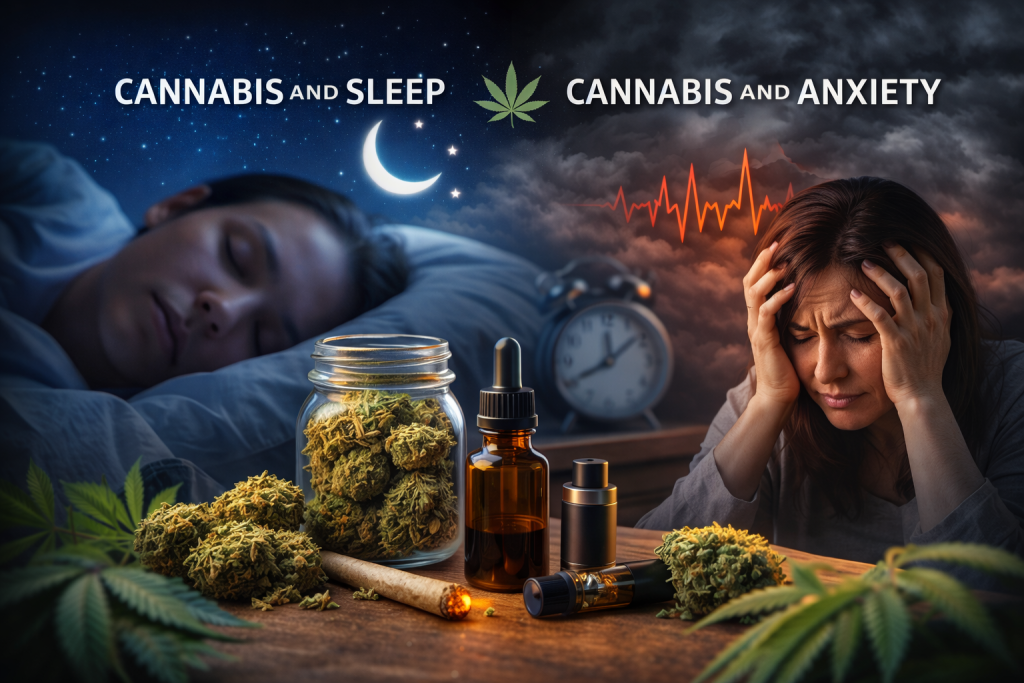
How Cannabis Affects Sleep and Anxiety
Feb
How Cannabis Affects Sleep and Anxiety
Sleep problems and anxiety disorders are among the most common health concerns facing Americans today. Stressful lifestyles, digital overstimulation, work pressure, and mental health challenges have led many people to seek alternatives to traditional medications. As cannabis legalization expands across the United States, more consumers are exploring how cannabis affects sleep and anxiety.
Cannabis has a long history of use for relaxation and emotional balance, but its effects vary depending on cannabinoid content, dosage, timing, and individual biology. This article explains how cannabis affects sleep and anxiety, breaking down the science, benefits, risks, and best practices in a clear and balanced way. The goal is to help readers make informed, responsible decisions grounded in evidence and real-world use. Read more here
Understanding Sleep and Anxiety
Sleep and anxiety are closely connected. Anxiety can make it difficult to fall asleep or stay asleep, while chronic sleep deprivation can worsen anxiety symptoms. This creates a cycle that is difficult to break without proper intervention.
Anxiety activates the body’s stress response, increasing heart rate, muscle tension, and mental alertness. Sleep, on the other hand, requires physical relaxation and mental calm. Many people turn to cannabis because it interacts with systems in the body that regulate both stress and sleep.
How Cannabis Works in the Body
Cannabis affects the body through the endocannabinoid system, a network of receptors that helps regulate mood, sleep, stress, appetite, and pain. The two most well-known cannabinoids are THC and CBD, and each influences sleep and anxiety differently.
THC is psychoactive and can produce relaxation, euphoria, and sedation at certain doses. CBD is non-intoxicating and is commonly associated with calming and anti-anxiety effects. Terpenes, the aromatic compounds found in cannabis, also play an important role in shaping the overall experience.
Cannabis and Sleep: What the Research Shows
Cannabis can affect sleep in both positive and negative ways, depending on how it is used. Many Americans report that cannabis helps them fall asleep faster, particularly when stress or racing thoughts keep them awake.
THC has sedative properties that may shorten the time it takes to fall asleep. Some studies suggest that THC can increase deep sleep in the short term, which may feel restorative. However, long-term or heavy use may reduce REM sleep, the stage associated with dreaming and emotional processing.
CBD appears to support sleep indirectly by reducing anxiety and physical discomfort. Rather than acting as a sedative, CBD may help create the mental calm necessary for natural sleep to occur.
Cannabis and Anxiety: A Complex Relationship
The relationship between cannabis and anxiety is complex. At low to moderate doses, certain cannabis products may reduce anxiety by calming the nervous system and quieting excessive thoughts. This is especially true for CBD-dominant or balanced THC-to-CBD products.
However, high doses of THC can increase anxiety in some individuals. Effects such as rapid heart rate, paranoia, or overstimulation may worsen anxious feelings, particularly in inexperienced users or those sensitive to THC.This dose-dependent effect is one of the most important factors in understanding how cannabis affects anxiety. More is not always better, and careful dosing is essential.
THC and Sleep
THC is often associated with drowsiness and relaxation, making it appealing for nighttime use. Many people use THC to help fall asleep faster, especially when insomnia is linked to stress or physical discomfort.
In the short term, THC may improve sleep onset. Over time, however, tolerance can develop, meaning higher doses are needed to achieve the same effect. Some users also report disrupted sleep patterns when stopping THC after regular use.
THC-heavy products may be best suited for occasional sleep support rather than nightly dependence.
CBD and Sleep
CBD does not produce intoxication and is widely used for anxiety management. By reducing stress, inflammation, and physical tension, CBD may support more consistent and restful sleep.
Many Americans prefer CBD for sleep because it does not impair cognition or cause next-day grogginess. CBD may be particularly helpful for people whose sleep issues are driven by anxiety rather than pain or restlessness.
Unlike THC, CBD is less likely to interfere with sleep architecture, making it appealing for long-term use.
Terpenes and Their Role in Sleep and Anxiety
Terpenes significantly influence how cannabis affects sleep and anxiety. Certain terpenes are associated with calming effects, while others promote alertness.
Myrcene is commonly linked to sedation and relaxation. Linalool, also found in lavender, is associated with anti-anxiety effects. Caryophyllene interacts with receptors involved in stress regulation and inflammation.
Products rich in these terpenes may enhance the sleep- and anxiety-related benefits of cannabis without relying solely on high THC levels.
Methods of Consumption and Their Impact
How cannabis is consumed plays a major role in how it affects sleep and anxiety. Inhalation methods such as vaping or smoking produce fast effects, making it easier to gauge dosage and timing. These methods may be useful for sudden anxiety or difficulty falling asleep.
Edibles take longer to activate but last much longer. While this can support staying asleep, it also increases the risk of overconsumption, especially with THC. Many anxiety-sensitive users prefer tinctures or capsules for more controlled dosing.
Choosing the right method is as important as choosing the right product.
Timing and Dosage Matter
Timing is critical when using cannabis for sleep or anxiety. Using stimulating strains or high doses too close to bedtime may interfere with sleep rather than improve it.
Low doses taken earlier in the evening may help reduce anxiety and prepare the body for rest. Starting with the smallest effective dose allows users to assess how their body responds.
For anxiety management, daytime use should prioritize low THC or CBD-dominant products to avoid cognitive impairment or heightened nervousness.
Risks and Considerations
While cannabis may help some individuals, it is not a universal solution. People with a history of panic disorder, psychosis, or severe anxiety should be cautious, especially with THC-rich products.
Dependence is also a consideration. Relying on cannabis every night for sleep may make it harder to sleep without it over time. Moderation, intention, and periodic breaks can help reduce this risk.
Cannabis may also interact with medications, so consulting a healthcare professional is advised for those managing chronic conditions.
Who May Benefit Most from Cannabis for Sleep and Anxiety
Cannabis may be beneficial for adults experiencing mild to moderate anxiety, stress-related insomnia, or sleep disruption due to physical discomfort. It may also help individuals seeking alternatives to traditional sleep aids.
Those who benefit most tend to use cannabis mindfully, with attention to dosage, timing, and product selection. CBD-dominant products are often preferred for daily anxiety management, while THC may be used occasionally for sleep support.
The Future of Cannabis and Mental Wellness
As research expands, cannabis is increasingly viewed as a tool within a broader wellness strategy rather than a cure-all. Personalized products, improved labeling, and better education are shaping the future of cannabis use for sleep and anxiety in America.
Ongoing research into cannabinoids and terpenes will likely lead to more targeted formulations designed specifically for mental health and sleep support.
Conclusion
Understanding how cannabis affects sleep and anxiety requires a balanced view of both its benefits and limitations. Cannabis can support relaxation, reduce anxiety, and improve sleep for some individuals, but results depend on product type, dosage, timing, and personal sensitivity.
THC, CBD, and terpenes each play distinct roles, and responsible use is essential for positive outcomes. By choosing quality products, starting with low doses, and respecting individual differences, Americans can make informed decisions about whether cannabis fits into their sleep and anxiety management routine.
As with any wellness tool, education, moderation, and self-awareness remain the keys to safe and effective use.
Frequently Asked Questions
1. Can cannabis help with sleep problems?
Yes, cannabis may help some people fall asleep faster and stay asleep longer, depending on the product and dose.
2. Does cannabis reduce anxiety?
Low doses of certain cannabis products, especially CBD-rich ones, may help reduce anxiety.
3. Can cannabis make anxiety worse?
Yes, high THC doses can increase anxiety or cause paranoia in some users.
4. Is THC or CBD better for sleep?
THC may help with falling asleep, while CBD supports sleep by reducing anxiety.
5. Is cannabis safe to use every night for sleep?
Regular use may lead to tolerance or dependence, so moderation is recommended.
6. What cannabis strains are best for sleep?
Strains with calming terpenes like myrcene or linalool are often preferred.
7. How does cannabis affect REM sleep?
THC may reduce REM sleep with long-term or heavy use.
8. What is the best way to use cannabis for anxiety?
Low-dose CBD or balanced THC:CBD products are commonly used.
9. How long before bed should cannabis be used?
Typically 30–60 minutes before sleep, depending on the method of consumption.
10. Is cannabis legal for sleep and anxiety use in the USA?
Legality varies by state; always follow local cannabis laws.
