
Uncategorized
How Cannabis May Help With Neuropathy
Feb
What Is Neuropathy and Why It Causes Chronic Pain
Neuropathy is a condition caused by damage or dysfunction of nerves, often resulting in persistent pain, burning sensations, tingling, numbness, or sharp electric-like shocks. It commonly affects the hands, feet, and legs but can occur anywhere in the body. Neuropathy may be linked to diabetes, autoimmune disorders, injuries, infections, chemotherapy, or unknown causes.
Unlike typical pain, neuropathic pain originates from faulty nerve signaling, making it difficult to manage with standard pain medications. This is why many patients seek alternative or complementary options, including cannabis, to help manage symptoms.
Why Neuropathic Pain Responds Differently to Treatment
Neuropathic pain is not caused by tissue damage alone. Instead, damaged nerves send exaggerated or incorrect pain signals to the brain. This explains why anti-inflammatory drugs or simple pain relievers often provide little relief.
Treatments that influence nerve signaling, pain perception, and central nervous system activity tend to be more effective. Cannabis interacts with these pathways, which is why it has gained attention for neuropathy management. Read more here
How Cannabis Interacts With Nerve Pain
Cannabis works through the endocannabinoid system, which plays a role in regulating pain, nerve communication, inflammation, sleep, and mood. Cannabinoid receptors are present in both the central and peripheral nervous systems.
By interacting with these receptors, cannabis compounds may reduce abnormal nerve firing, dampen pain signals, and alter how pain is perceived. This mechanism is particularly relevant for chronic nerve-related conditions like neuropathy.
THC and Neuropathy: Pain Perception Modulation
THC may help reduce neuropathic pain by altering how the brain interprets pain signals. Many patients report reduced burning or stabbing sensations and improved tolerance to discomfort.
However, THC can also cause side effects such as dizziness, anxiety, or impaired focus, especially at higher doses. For neuropathy patients, low and carefully controlled doses are often more effective than strong intoxication.
CBD and Its Role in Neuropathy Management
CBD is non-intoxicating and commonly associated with calming, anti-inflammatory, and nerve-modulating properties. Research suggests CBD may help reduce nerve inflammation and stabilize overactive nerve signaling.
Many neuropathy patients prefer CBD-dominant or balanced products because they can be used more consistently without cognitive impairment. CBD may also help manage related issues such as anxiety, poor sleep, and muscle tension.
The Importance of Terpenes for Nerve Pain Relief
Terpenes are often overlooked in neuropathy discussions, yet they play a significant role in how cannabis affects pain. Certain terpenes may enhance nerve pain relief and overall comfort.
Beta-caryophyllene interacts with receptors involved in pain regulation. Myrcene is associated with muscle relaxation and sedation. Linalool may help calm the nervous system and support sleep. Limonene may improve mood and reduce pain-related stress.
Products rich in these terpenes may offer better neuropathy support than cannabinoid content alone.
Cannabis Strains That May Be Beneficial for Neuropathy Patients
While individual responses vary, the following strains are commonly associated with neuropathy relief due to their cannabinoid balance and terpene profiles. Selection should focus on chemical composition rather than strain name alone.
ACDC is a high-CBD strain often chosen for nerve pain without intoxication.
Harlequin offers a balanced CBD-to-THC ratio and is commonly used for daytime nerve pain.
Northern Lights is associated with physical relaxation and nighttime pain relief.
Granddaddy Purple is often used for deep body relaxation and discomfort reduction.
Blue Dream is known for balanced effects that may ease pain while maintaining mental clarity.
Cannatonic is CBD-rich and frequently mentioned for chronic nerve pain.
White Widow is sometimes used for pain relief with moderate stimulation.
Purple Kush is often chosen for severe pain and sleep support.
Patients are encouraged to start with low doses and adjust based on response.
Best Ways to Use Cannabis for Neuropathy
Consumption method significantly affects how cannabis helps with nerve pain. Inhalation provides fast relief and may help during pain flare-ups, but effects are shorter-lasting.
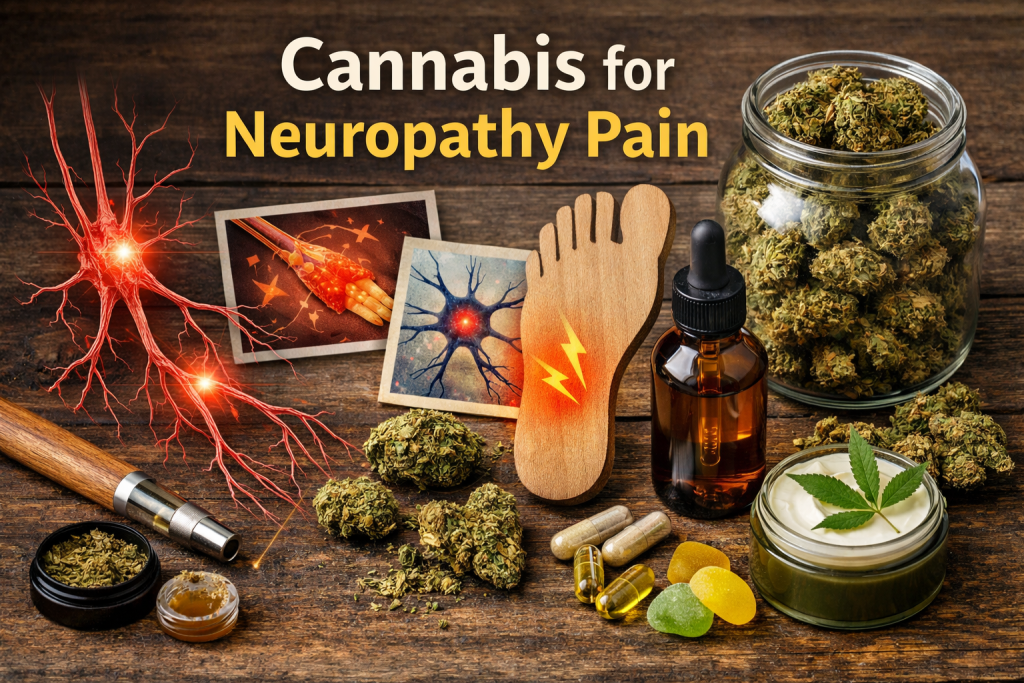
Edibles and capsules provide longer-lasting relief but require careful dosing. Tinctures allow precise control and consistent symptom management. Topicals may help localized nerve discomfort, although effects vary.
Combining methods under careful guidance may offer more balanced relief.
Cannabis, Sleep, and NeuropathyNeuropathy often disrupts sleep due to nighttime pain, tingling, or burning sensations. Poor sleep can increase pain sensitivity and worsen symptoms.
Certain cannabis products may indirectly help neuropathy by improving sleep quality. Calming strains and terpene profiles may reduce nighttime nerve activity, allowing deeper rest and better pain tolerance the next day.
Long-Term Use: What Many Articles Don’t Address
Long-term cannabis use for neuropathy requires careful consideration. Regular THC use may lead to tolerance, reducing effectiveness over time. Rotating products, prioritizing CBD, and using the lowest effective dose may help maintain benefits.
Cannabis should complement other strategies such as physical therapy, nutrition, stress management, and medical care rather than replace them.
Conclusion
Cannabis may offer meaningful symptom relief for neuropathy by influencing nerve signaling, pain perception, inflammation, and sleep. THC, CBD, terpenes, and strain selection all play important roles in determining effectiveness.
While cannabis does not cure neuropathy or repair nerve damage, it may help some patients manage daily discomfort more effectively when used responsibly and thoughtfully.
FAQs: Cannabis and Neuropathy
1. Can cannabis help with neuropathy pain?
Some patients report reduced nerve pain and discomfort.
2. Is CBD better than THC for neuropathy?
CBD is often preferred for regular use due to fewer side effects.
3. Can cannabis heal nerve damage?
Cannabis does not repair nerves but may help manage symptoms.
4. Which cannabis strains are best for neuropathy?
ACDC, Harlequin, Northern Lights, and Blue Dream are commonly mentioned.
5. How much cannabis should neuropathy patients use?
Start with a low dose and increase slowly if needed.
6. Can cannabis improve neuropathy-related sleep issues?
Yes, reducing pain may help improve sleep quality.
7. Are cannabis topicals useful for neuropathy?
They may help localized discomfort, but results vary.
8. Can cannabis replace neuropathy medication?
It should not replace prescribed treatment without guidance.
9. Does cannabis cause dependence when used for nerve pain?
Regular use may lead to tolerance; moderation is advised.
10. How long does cannabis relief last for neuropathy?
Duration depends on product type and method of use.
